 Vantage

Over the last two decades, I have worked with leaders across different stages of their careers. Some were first-time managers trying to find their voice. Others were senior executives leading large teams, businesses and transformations. Despite their differences in experience, industry and expertise, I have noticed a common pattern.
They are the people who understand themselves the best.
This realization did not come from books or leadership models. It came from countless conversations in classrooms, development centers, coaching sessions and leadership assessments. It came from watching leaders reflect on feedback, confront uncomfortable realities and gradually develop a clearer understanding of who they are and how they impact others. And in many ways, it has changed how I think about leadership development itself.
The moment that repeats itself
One of the most powerful moments in any leadership development journey is surprisingly simple. A leader receives feedback. Sometimes it comes through a 360-degree process. Sometimes through an assessment. Sometimes through a coaching conversation. The feedback itself is rarely shocking. What is surprising is the gap between intention and impact. A leader who sees himself as empowering discovers that his team experiences him as distant. A leader known for high standards realizes that others sometimes perceive those standards as pressure. A leader who takes pride in being decisive learns that people around her occasionally experience that decisiveness as impatience.
Whenever these moments occur, the room becomes quiet.
Not because the leader disagrees. But because they recognize a truth they had never fully seen before. I have witnessed these moments many times, and they continue to remind me that leadership is not just about influencing others. It is first about understanding oneself.
Why experience alone is not enough
Many organizations invest heavily in developing leadership capability. As they should. The challenges leaders face today are far more complex than they were even a decade ago. They must navigate ambiguity, technological disruption, generational shifts and constantly evolving expectations from employees and stakeholders. Naturally, organizations respond by offering new tools, frameworks and learning experiences.
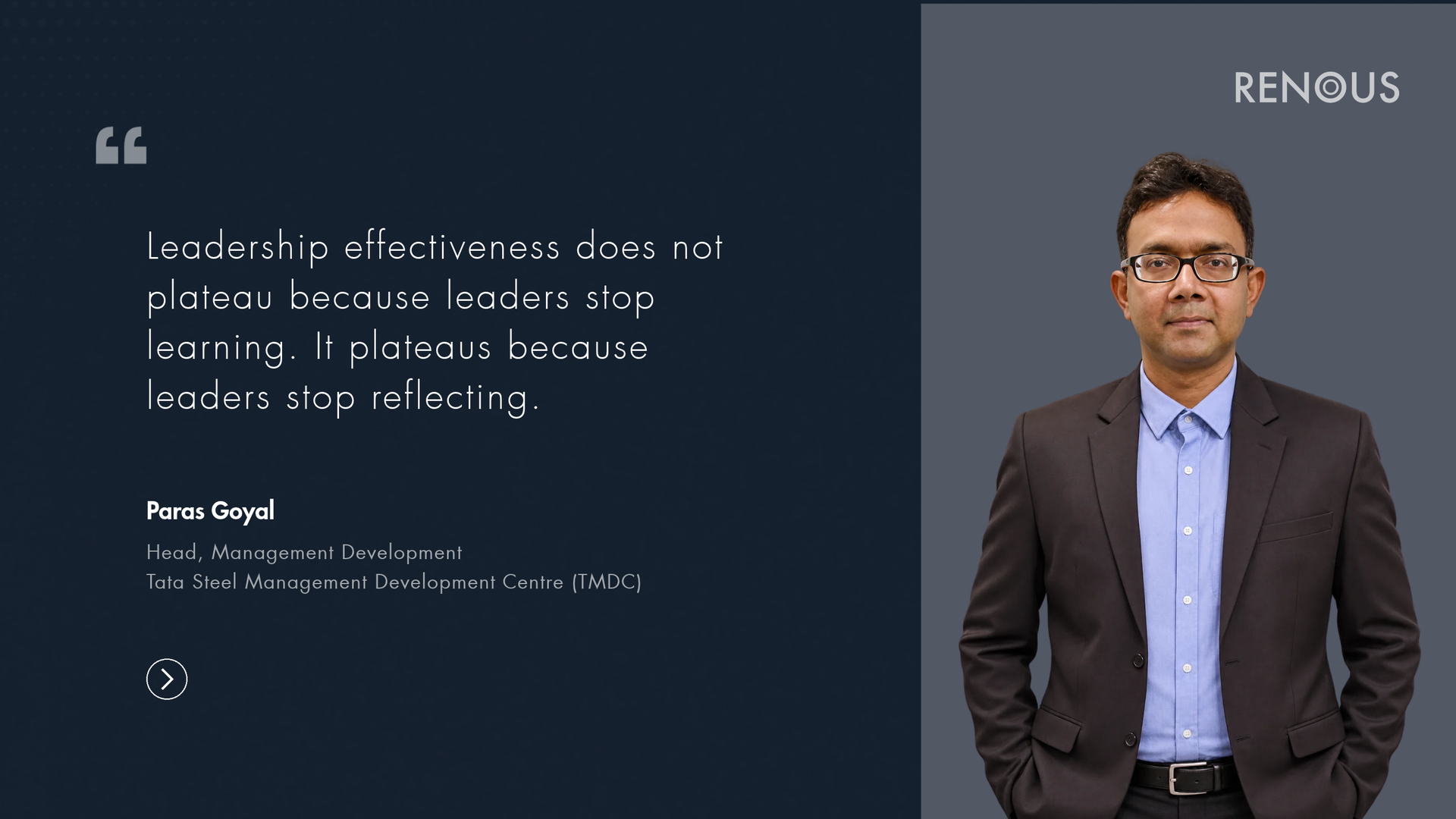
Yet I have often found that leadership effectiveness does not plateau because leaders stop learning.
It plateaus because leaders stop reflecting.
As careers progress, expertise increases. Unfortunately, self-awareness does not always increase at the same rate. In fact, the higher leaders rise, the fewer people are willing to tell them what they genuinely need to hear. Titles create authority, but they can also create distance. And that distance can quietly become a leader's biggest blind spot.
What coaching taught me
My work in executive coaching has reinforced one lesson more than any other. People do not grow because they receive feedback. People grow because they choose to engage with it. The most successful leaders I have worked with share an interesting characteristic. They are curious. Curious about why certain situations trigger them. Curious about how others experience their leadership. Curious about patterns they may have overlooked. They do not view feedback as judgement.
They view it as data.
That shift in mindset makes all the difference. When defensiveness reduces, learning increases. When reflection deepens, behavior changes.
And when behavior changes, leadership impact changes.
Leadership in the Age of AI
As organizations increasingly embrace artificial intelligence and automation, it is natural to focus on technological capability. Technology will undoubtedly reshape the future of work. But there is something technology cannot do for us. It cannot replace self-awareness. AI can provide information. It can support decisions. It can improve efficiency. But it cannot help a leader understand why a team member feels unheard. It cannot build trust within a team. It cannot recognize the subtle behavioral signals that either inspire commitment or create disengagement.
The future workplace may become more digital, but leadership will remain profoundly human.
That is why I believe self-awareness is becoming more important, not less.
A personal reflection
If there is one thing I have learned through years of working with leaders, it is this: Leadership development is often portrayed as a journey of acquiring something new. A new competency. A new framework. A new capability. But some of the most meaningful growth comes from discovering something that was already there.
A hidden strength. An overlooked blind spot. A belief that no longer serves us. Or simply a deeper understanding of how we affect the people around us.
The leaders I admire most are not those who believe they have all the answers. They are those who continue asking questions about themselves long after others have stopped asking. Because ultimately, leadership is not measured by how much knowledge we accumulate. It is measured by how consciously we show up for others. And that journey begins with looking inward.
Which brings me back to the paradox. The most important leadership skill isn't what most leaders think. It isn't strategy, authority, expertise, or even influence. It is self-awareness. Because every leadership strength, every relationship, every decision, and every act of influence ultimately flows from one source: the leader's understanding of themselves.
The better we see ourselves, the better we lead others.
And perhaps that is where true leadership development begins. Not with learning more, but with seeing more.