 Vantage
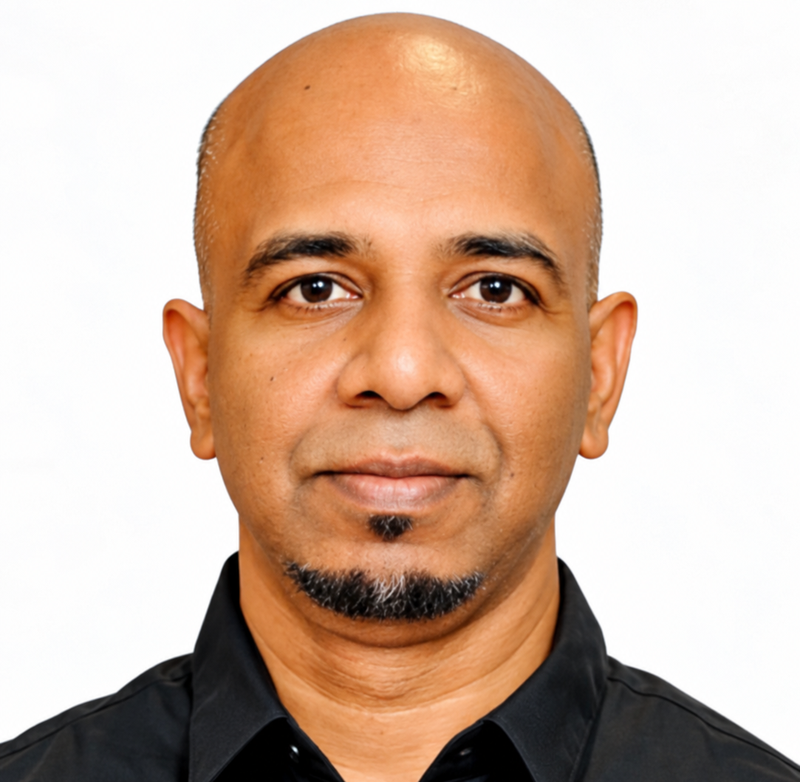
The fastest thing I have ever delivered, I built alone. A self-service insurance portal, coded in forty-five days, working closely with the business team on a simple workflow in a web portal, in a region where nothing like it had existed. I was proud of it then. I am warier of that pride now, because speed that depends on one person is a loan against the organization's future, and the organization always repays it. Much of what I have learned since has been about learning to stop borrowing.
The measure of a transformation, I have come to believe, is how many good decisions get made in rooms the leader never enters.
Staying close to the people who understood the need kept that portal honest, and I still believe in it. But it answered only half the question. The harder half was how to make useful delivery repeatable when the work is larger than any one person.
A ceiling disguised as a strength
I came up through software engineering, and for years my credibility rested on being able to do the hard thing myself. In a product of one, that instinct is an asset. In an enterprise, it becomes a ceiling, because the organization learns to wait for you.
At Capita, I led the modernization of a portfolio of legacy applications, moving them from independent on-premises servers into the cloud. They did not all deserve the same treatment. Some could be lifted across with little change, some were redesigned for platform services, some were replaced by software as a service, and some, once we looked at them honestly, did not need to exist and were consolidated. A programme like that invites its leader to become the court of appeal for every case. I could have been, and it would have moved at the speed of my calendar.
What helped was a design decision rather than a heroic one: a single portal as the common landing point for the applications, with access governed by roles and tied to enterprise identity. It made the safe route the easy route. My job moved from answering questions to shaping the conditions in which fewer questions needed asking.
Standardization, I came to think, is a way of distributing judgement.
It makes certain decisions once, so that nobody has to remake them, and leaves senior attention for the cases that are genuinely exceptional.
A data center with a better invoice
Later, at UBS, I led a platform transformation inside a wider move from on-premises infrastructure to public cloud. Over a couple of years, most of the workload made that journey. I would like to credit the technology, but I cannot, not entirely.
A cloud platform run through tickets, queues and manual approvals is a data center with a better invoice.
Organizations modernize the infrastructure and keep the habits that made the old one painful.
So we ran the platform as a product. It had a strategy, a roadmap and an owner, and we agreed outcomes with our customers in business terms: what it would cost, and how easy it would be to use and to maintain. Self-service and automation were the means. Agile ways of working helped us bring the work into view and set priorities, though they are only as useful as the conversations they provoke about what customers need and what a team can sustain.
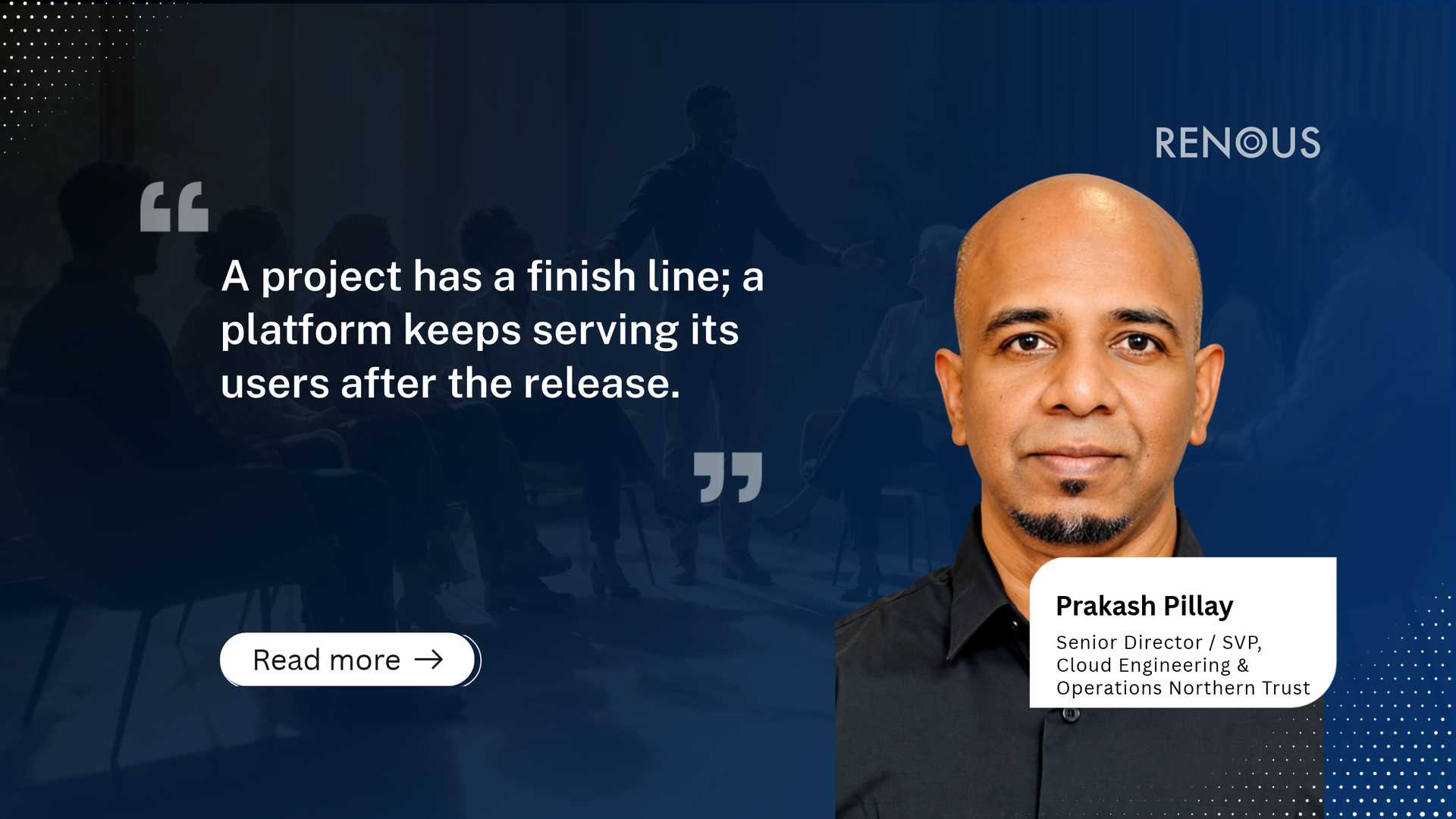
That changes the operating model. A project has a finish line; a platform keeps serving its users after the release. Someone has to stay accountable for its direction and its users’ experience, and the teams around it need enough clarity to improve it without every decision travelling upwards. Modernization without that change tends to deliver less than it promised.
What it costs to keep
Product thinking also asks for an honest look at cost. We examined what was being consumed and whether existing hosting choices still made sense, and we looked across a complicated technology portfolio for places where consolidation was warranted. These were commercial decisions as much as technical ones, because every option we keep has a price, even when it is spread thinly across budgets and teams.
Consolidation needs judgement too. A simpler portfolio is worth having only if it still serves the people who rely on it. I learned to ask not only whether a technology worked, but what it cost to run and support, and whether the value justified that commitment.
Building people who can decide
None of this works without people, and this is where my thinking has changed most. Early on, I counted progress in the problems my team could solve.
I now count it in the decisions they make well without me.
That means building teams more capable than I am, and giving them clear objectives and honest guidance rather than answers. It is uncomfortable by design. On a technical question I may sometimes be the least informed person in the room, and the most useful thing I can offer is the outcome we are chasing and the boundaries we must respect, and occasionally just a question worth asking before a decision is made.
There is a cost to this. Some decisions will be made differently from how I would have made them, and occasionally worse. Speed, security, cost and resilience pull in different directions, and no operating model removes that tension. What a good one can do is make ownership clear, so that the people closest to a decision know when they can act and when they need help.
I still value the satisfaction of building something myself. But I have come to see a truer measure of leadership in what remains when I am not in the room. The question I now put to myself is simple and a little humbling: if I stepped away for a quarter, would the decisions get better, stay the same, or stop? Everything I build is an attempt to make the answer “better”.