 Vantage

The scale is hard to ignore. India is now home to a large and growing number of GCCs, and many centers set up in recent years launched with a product or portfolio mandate from day one. AI is increasingly written into the charter itself. Across banking and financial services, GCC leaders are walking into the planning season with fresh AI budgets and a long list of new projects: legacy modernization, AI-assisted engineering, intelligent operations, faster change delivery.
The real question is therefore no longer whether AI can do the work. The real question is: What kind of work should reach the highest levels of the organization—and what infrastructure is required for AI to do that work safely?
For GCCs operating in the financial services space, this is where the bottleneck lies.
Banks are built on decades of accumulated technology, business rules, compliance requirements, customer journeys and institutional knowledge. Much of this knowledge is distributed across legacy applications, APIs, databases, documents and people.
AI understands the wider world extraordinarily well, but it does not automatically understand the bank’s technology estate and why a particular banking system works the way it does.
This is where the next phase of enterprise AI is likely to be decided: at the intersection of intelligence and institutional context.
And GCCs need an AI-native engineering system designed to make enterprise knowledge connected, computable and visual. This requires a multidimensional, multilayer system of connected knowledge.
Before AI can safely become an enterprise actor, it requires a foundational enterprise knowledge layer.
From AI That Knows to AI That Understands
Generative AI has dramatically reduced the cost of producing code and content. But producing something is not the same as understanding its consequences.
Consider a bank changing a single transaction rule. The visible change may appear relatively small, but the rule could connect to customer journeys, compliance processes, APIs, databases and downstream applications. An AI system that only sees the code may produce a technically valid change while missing the organizational consequences.
Enterprises should connect knowledge across business, operations, compliance and technology through multiple dimensions, while organizing information into connected units of knowledge. Before AI acts and makes code changes, AI should give an evidence-backed view of the enterprise.
That creates the first major leverage point:
Context becomes a strategic asset.
In the first generation of enterprise AI, companies competed over access to models, computing power and data. In the next generation, they may compete over how effectively they can convert their unique institutional knowledge into machine-understandable context.
The Leverage Points for an Enterprise
First, domain knowledge can become technology infrastructure.
Organizations have spent decades working in financial technology. The opportunity is to convert that accumulated understanding of banking into a computational architecture that AI can use. This potentially moves the company away from competing primarily on software development capacity and toward competing on knowledge architecture.
Second, the legacy problem becomes an AI opportunity.
Banks cannot simply throw away decades of technology. Legacy systems remain deeply embedded in products, processes and regulatory controls. The difficulty is not merely replacing old code; it is understanding the relationships contained within it.
AI should highlight the full impact of a change—helping determine what a proposed change could affect and why those dependencies exist.
This is strategically powerful because modernization is one of the biggest unresolved problems in enterprise technology. If AI can make legacy environments understandable, then AI moves from being a productivity tool to becoming a modernization engine.
The future may not belong to the company with the largest language model. It may belong to the company that enables multiple AI systems to operate reliably inside complex enterprises.
The Work That Reaches HQ
There is also a deeper organizational implication. Traditionally, senior executives received summaries from layers of analysts, engineers and managers. Information travelled upward, became compressed and was eventually converted into a decision.
AI changes that chain.
If enterprise AI can understand the relationships between business intent, technology architecture, operational rules and compliance, then some work that previously required multiple layers of human interpretation can potentially reach senior decision-makers much faster.
This does not eliminate human leadership. Quite the opposite.
The role of leadership shifts from asking people to discover what is happening to deciding what should happen once the enterprise context is visible.
That is what makes “the work that reached HQ” significant.
The real transformation is not simply that machines perform more work. It is that higher-quality intelligence can reach the center of the organization with less distortion, delay and ambiguity.
From Coding to Cognitive Engineering
This transition marks a movement away from coding-led software engineering toward cognitive engineering.
The distinction is important.
Coding asks: How do we implement this requirement?
Cognitive engineering asks: What does the enterprise mean, what relationships matter, what could change, and what consequences follow?
An enterprise knowledge layer supports this progression through various connected capabilities: a connected knowledge base, a multidimensional map of how everything relates, a clear view of what a change could affect, engineering tools for building, running, changing and modernizing systems, and a central place for governance and oversight.
The leverage point therefore moves upward—from writing code to mastering and understanding the system in which the code operates.
The Bigger Technology Opportunity
There is a particularly interesting implication for the current GCC market.
For three decades, the technology industry built a global advantage around software engineering, IT services and large-scale delivery capacity. Generative AI fundamentally challenges that model because machines can increasingly generate software at extraordinary speed.
The next advantage may therefore be engineering intelligence rather than engineering volume.
The Final Leverage Point: Trust
Ultimately, however, enterprise AI will not be judged by how impressive its demonstrations are, but by whether organizations trust it with consequential decisions and changes.
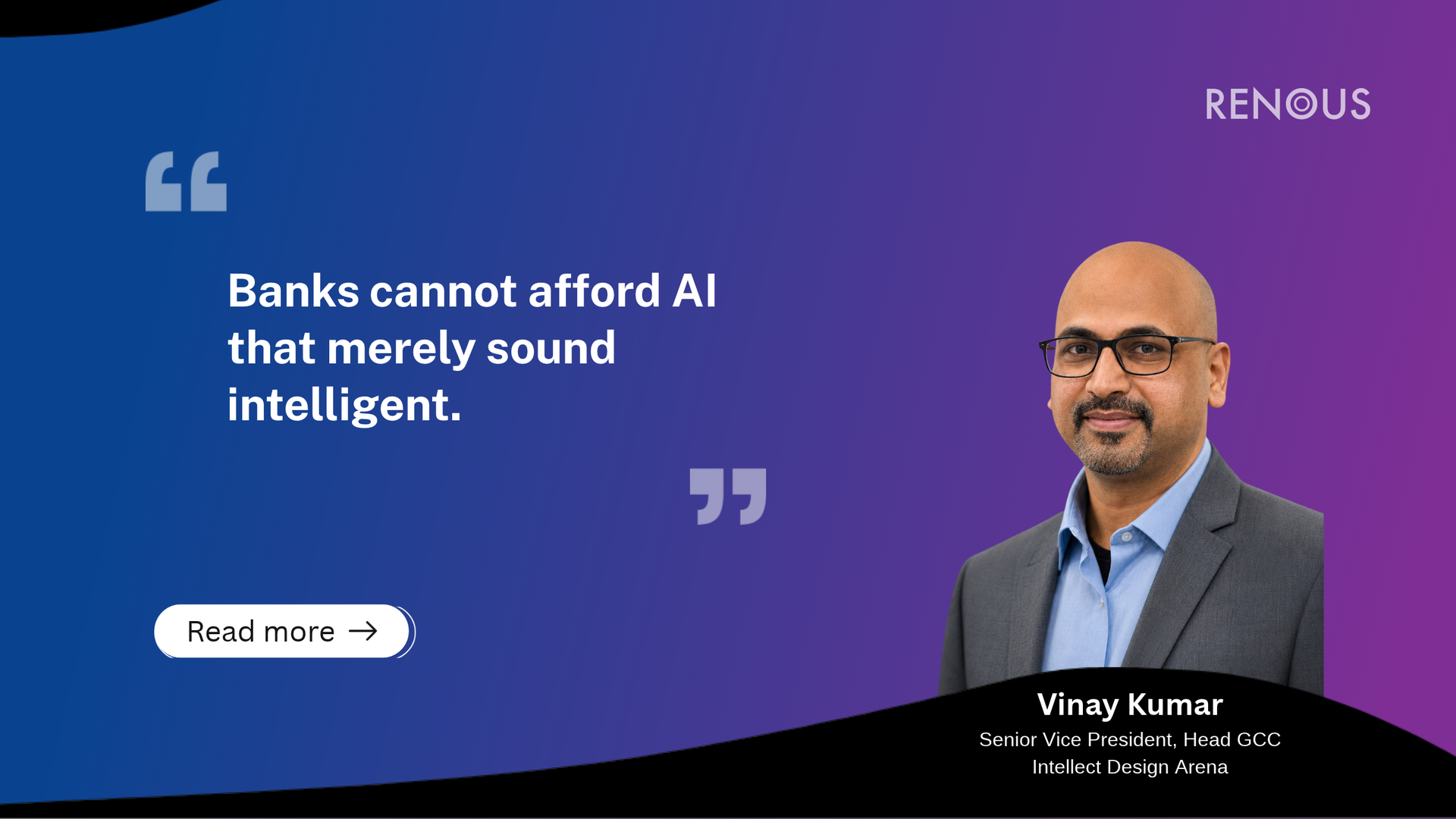
Banks cannot afford AI that merely sounds intelligent. They need AI that can explain its reasoning, identify dependencies, accurately assess risk impact and operate within regulatory governance.
That makes trust the final leverage point.
It is about creating a connected and computational knowledge infrastructure that allows AI to move from suggesting to understanding, and eventually from understanding to acting.
The next chapter of AI may therefore not be won simply by building smarter models.
It may be won by connecting those models to the places where real-world complexity lives.
And when that happens, the most important work generated by AI may no longer remain inside the technology department.
It may reach HQ.